CPAP vs Oral Appliances: A Severity-Based Guide for Better Sleep
Many people searching for CPAP alternatives in Austintown are not actually looking for a "no treatment" option. They are looking for a treatment they can use consistently. That is the real deciding factor in sleep apnea care: the best option is the one that matches your diagnosis and severity, and that you can realistically wear night after night.
This guide compares CPAP and oral appliance therapy using the same practical filter we see patients wrestle with in real life: sleep study severity (including AHI), symptoms, comfort, and what to do if CPAP is not working for you. We also include a simple decision path for patients in Austintown, Youngstown, and Liberty Township who want clear next steps.
TL;DR - Choose Based on Severity and What You Can Wear
CPAP and oral appliances both have a role in obstructive sleep apnea care. Your AHI (from a sleep study), your symptoms, and your ability to use the treatment nightly help determine what fits best.
- Start with your sleep study: know your AHI and whether your OSA is mild, moderate, or severe.
- CPAP is often recommended across severities, but comfort issues are common and solvable.
- Oral appliances can be strong CPAP alternatives for many snoring and OSA situations, especially when CPAP is not tolerated.
- Symptoms matter: fatigue, morning headaches, and witnessed pauses can guide urgency and follow-up.
- Next step: bring your sleep study (if you have one) to a consult so your treatment matches your severity.
First, Define "CPAP Alternatives" the Right Way (Not Just "No CPAP")
"Alternatives" can mean different things online. Some pages list machines, accessories, or general health advice without helping you decide what fits your diagnosis. A useful definition is simpler: CPAP alternatives are other evidence-based ways to manage snoring or obstructive sleep apnea when CPAP is not the right fit for comfort, lifestyle, or long-term consistency.
If you want a quick overview of how oral appliance therapy can fit into a broader plan, our CPAP alternatives and oral appliance options page summarizes the "big picture" approach.
How Sleep Apnea Severity Shapes Your Options (AHI Basics)
Severity is commonly discussed using the AHI (apnea-hypopnea index) from a sleep study. AHI helps estimate how frequently breathing disruptions occur during sleep. It is not the only factor, but it is a useful anchor for deciding how aggressive treatment needs to be and how closely results should be monitored.
In our previous blog, "Your AHI Score Explained | Sleep Study Results," we discussed how to read AHI and related numbers. In this article, we focus on how to use that information to choose between CPAP, oral appliances, and other CPAP alternatives.
A Simple Severity-to-Option Framework
- Primary snoring (no OSA diagnosis): oral appliance therapy is often considered when a dental approach is appropriate and other factors have been reviewed.
- Mild to moderate OSA: CPAP may be recommended, and oral appliances may be an option depending on your case, symptoms, and tolerance.
- Severe OSA: CPAP is commonly a leading therapy. If CPAP is not tolerated, your team should guide you through structured alternatives and coordinated care rather than leaving you to guess.
CPAP vs Oral Appliances: What Each Option Is Best At
CPAP: Strong When You Can Use It Consistently
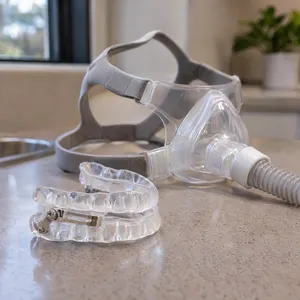
CPAP works by delivering pressurized air through a mask to help keep the airway open. Many patients do very well with CPAP once mask fit, dryness, pressure settings, and routine are addressed.
Oral Appliance Therapy: Compact, Quiet, and Often Easier to Stick With
Oral appliance therapy uses a custom dental device worn during sleep (often designed to position the jaw forward) to support airflow. For many people, the appeal is practical: less equipment, easier travel, and less disruption.
If you are exploring a dental option with a team focused on non-invasive sleep apnea therapy, start with our sleep apnea overview to understand symptoms and treatment categories before you choose.
A Patient-Friendly Decision Path (Bring This to Your Consult)
Directory listings and broad medical sites often skip the questions that matter most in real life. Use the decision path below to create clarity before you commit time and money.
Step 1: Do You Have a Diagnosis (Sleep Study) Yet?
- If yes: bring your report and ask how severity and symptoms affect CPAP vs oral appliances.
- If no: start with screening and a discussion about next diagnostic steps so you are not treating the wrong problem.
If you are trying to plan testing logistics, our blog What a Sleep Study Near Youngstown Reveals can help you understand what that evaluation is designed to show.
Step 2: What Is Your Main Barrier With CPAP?
- Mask discomfort or leaks: ask about mask refitting and comfort strategies before you quit.
- Dryness, congestion, or pressure discomfort: ask whether settings and humidity can be adjusted.
- Claustrophobia or anxiety: ask about gradual acclimation and alternatives that you can actually use.
- Travel and lifestyle: oral appliances are often appealing as a compact alternative.
Step 3: What Symptoms Are You Trying to Fix?
Patients in Austintown often start researching because symptoms are affecting work, mood, and relationships. If you are noticing patterns that fit sleep apnea symptoms in Austintown, do not ignore them, even if you are "not sure yet."
For a detailed symptom checklist, see Sleep Apnea Symptom Checklist: When to Get Help.
Where a Sleep Dentist Fits: Getting a Personalized Plan (Not a Generic List)
A dental sleep medicine practice can help bridge the gap between "here are a bunch of options" and "here is what makes sense for your severity and your mouth." Dr. Charles Verbanic, DDS and our team focus on non-invasive sleep apnea therapy and custom-engineered oral sleep appliances designed to be comfortable and practical for nightly use.
One clinical observation we hear repeatedly is that many CPAP-intolerant patients are not refusing care. They are frustrated by a setup that does not match their sleep habits. When the plan is adjusted to the person, not just the diagnosis code, consistency often improves.
CPAP Alternatives in Austintown: What to Ask So You Leave With Clarity
If you are comparing CPAP alternatives in Austintown, ask questions that connect severity to a concrete next step, not just a product.
- What does my sleep study say about severity and risk? (Ask for AHI context.)
- Which option is most likely to be used nightly for me? (Comfort matters.)
- How will we measure improvement? (Symptoms, follow-ups, and coordination when appropriate.)
- What side effects should I expect with an oral appliance? (Jaw soreness or bite changes should be discussed.)
- What is the plan if the first approach is not enough? (A plan beats guesswork.)
FAQs
Severity is commonly described using your sleep study AHI (apnea-hypopnea index). Your report may label your results as mild, moderate, or severe based on how often breathing events occur per hour. If you are not sure what your numbers mean, bring your sleep study to your consult so your care team can explain how severity affects treatment choices.
For many patients, yes. A custom oral appliance (often a mandibular advancement device) can be a CPAP alternative when it is appropriate for your diagnosis and you can wear it consistently. The best option depends on sleep study severity, symptoms, and individual anatomy and tolerance.
The next step is usually a structured re-check of your diagnosis, symptoms, and barriers (mask comfort, pressure settings, dryness, anxiety, travel, etc.). From there, your team can discuss CPAP troubleshooting, oral appliance therapy, and other coordinated options based on your severity and medical history.
Yes. Symptoms such as loud snoring, daytime sleepiness, morning headaches, and witnessed breathing pauses can be meaningful even when a single number looks borderline. Treatment decisions should consider your full sleep study, symptoms, and health context rather than AHI alone.
You can schedule a visit to discuss options even if you have not completed a sleep study yet. However, a sleep study is typically important for diagnosing obstructive sleep apnea and understanding severity, which helps determine whether an oral appliance is a safe and appropriate option for you.
Related Reading
- Our Solution (Oral Appliance Therapy and CPAP Alternatives)
- Your AHI Score Explained: What Sleep Study Numbers Really Mean
- Sleep Apnea Symptom Checklist: When to Get Help
- Sleep Apnea - Overview & Facts
- Contact
Conclusion: The Best Option Is the One Matched to Your Severity and Your Life
Comparing CPAP and oral appliances should not feel like scrolling through a directory of disconnected answers. Start with severity (AHI and related findings), add symptom patterns, then choose the option you can use consistently. That is how CPAP alternatives become a real plan instead of a search rabbit hole.
If you are looking for guidance from sleep apnea doctors in Austintown and surrounding areas, our team can help you understand your sleep study, review symptoms, and discuss a practical treatment path. Call (330) 759-4550 to schedule a consultation.