Waking up exhausted after a full night in bed is more than frustrating — for many people, it is the first sign that something is happening during sleep that they cannot see or control. Sleep dentistry offers a gentler, equipment-free path to relief that is transforming how patients in this area approach their care. Our previous post, “3 Reasons Sleep Dentistry is Helpful,” explained why this approach can be valuable for patients looking for a more comfortable solution. This guide focuses on who is actually a strong candidate for sleep dentistry and what that journey looks like.
TL;DR — A Clearer Night Starts with Knowing If You Qualify
Sleep dentistry gives eligible patients a custom oral device that keeps the airway open without a CPAP machine. Here is what that means for you:
- You can find out if you qualify without an overnight lab stay — at-home sleep testing is available.
- A custom-fitted oral device is more comfortable and travel-friendly than traditional CPAP equipment.
- Most insurance plans and Medicare cover the oral sleep device.
- Early intervention often means a simpler path to treatment and faster results.
- Our dental care team walks you through each step, from screening to fitting.
Signs You May Be a Strong Candidate for Sleep Dentistry
Not every patient with sleep-related breathing problems will respond the same way to treatment. Our dental team looks at a clear set of indicators to determine whether sleep dentistry is the most appropriate approach for each individual.
-
You Have Been Diagnosed with Mild to Moderate Obstructive Sleep Apnea
The most straightforward candidate for sleep dentistry in Austintown is a patient with a confirmed diagnosis of mild to moderate obstructive sleep apnea. Oral appliance therapy works by repositioning the jaw and tongue to keep the airway open throughout the night. Patients in this category frequently achieve significant symptom relief with a custom oral device and no CPAP machinery involved.
-
You Have Tried CPAP and Found It Difficult to Tolerate
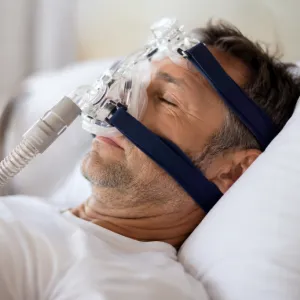
CPAP intolerance is one of the most common reasons patients seek out a sleep dentist in Austintown. Mask discomfort, air pressure issues, noise, and difficulty traveling with bulky equipment lead many patients to abandon therapy before it has a chance to work. A custom oral device eliminates all of that — it is compact, silent, and fits precisely to your mouth.
-
Your Partner Reports Loud or Frequent Snoring
Snoring that disrupts a household is one of the clearest early indicators of obstructed airflow during sleep. According to the American Dental Association, oral appliances have proven effective for patients whose airway is consistently narrowing during sleep, causing vibration in the soft tissue. If your partner regularly notices pauses in your breathing or wakes you up because of snoring, that is a sign worth bringing to our dental care team.
-
You Experience Daytime Fatigue Despite a Full Night of Sleep
Persistent tiredness that does not improve with more time in bed is one of the most telling signs of disrupted breathing during sleep. Patients looking for a sleep care often mention that they feel unrested regardless of how early they go to bed. This symptom, combined with morning headaches or difficulty concentrating, strongly suggests that the body is being repeatedly pulled out of restorative sleep by airway events.
-
You Prefer a Non-Invasive, Portable Treatment Option
Patients who travel frequently, dislike wearing a mask, or simply want a quieter approach to managing their sleep apnea treatment are typically excellent candidates for oral appliance therapy. The customized oral airway device we fit at our dental practice is taken from precise measurements of your mouth, ensuring maximum airflow without bulk. It fits into a small case and requires no power source, making it a practical solution for anyone whose lifestyle makes CPAP compliance difficult.
Still unsure whether a custom device would work for your situation? Call our team at (330) 759-4550 — we are happy to answer your questions before you commit to anything.
Questions Patients Ask Before Starting Sleep Dentistry
1. Does sleep dentistry only work for sleep apnea?
Oral appliance therapy is most commonly used for obstructive sleep apnea and primary snoring. Our dental care team will review your sleep study results and symptoms to confirm whether a custom device is the most appropriate option for your specific condition.
2. Do I need a referral from my doctor to see a sleep dentist?
No referral is required to contact our dental office directly. We work with patients who come to us independently and those who are referred by their primary care physician or a sleep specialist.
3. How long does it take to get fitted for an oral device?
After your initial consultation and review of your sleep study, fitting typically takes place at a follow-up appointment. Individual measurements are taken to create a device built precisely for your mouth — most patients receive their device within a few weeks.
4. What if I have never had a sleep study done?
At-home sleep testing is sufficient to determine whether you are a candidate for oral appliance therapy. You do not need to complete an overnight lab study before exploring your options with our dental care team.
The Right Candidate Finds a Clearer Path to Better Sleep
Sleep dentistry is not a one-size approach — it is a precisely matched solution for patients whose symptoms, diagnosis, and lifestyle make oral appliance therapy the smart choice. At Sleep Easy Dental Spa, our dental team brings decades of experience and a track record of helping patients across the greater Youngstown area finally get the restorative sleep their bodies need. If you have been struggling with snoring, daytime fatigue, or CPAP discomfort, call us today at (330) 759-4550 to learn more about sleep apnea treatment in Austintown and take the first step toward a better night.